
What to Expect During the First Senior Placement Consultation
 Cory Strauch, CADDCT, Assisted Living Administrator, QMAPLast updated September 2, 20269 min read
The first consultation is a practical conversation, not a sales pitch. Expect questions about medical needs, memory, mobility, medications, budget, location, and timing. It usually takes thirty to forty five minutes. You leave with a care level view, a realistic budget range, and two or three communities worth touring.
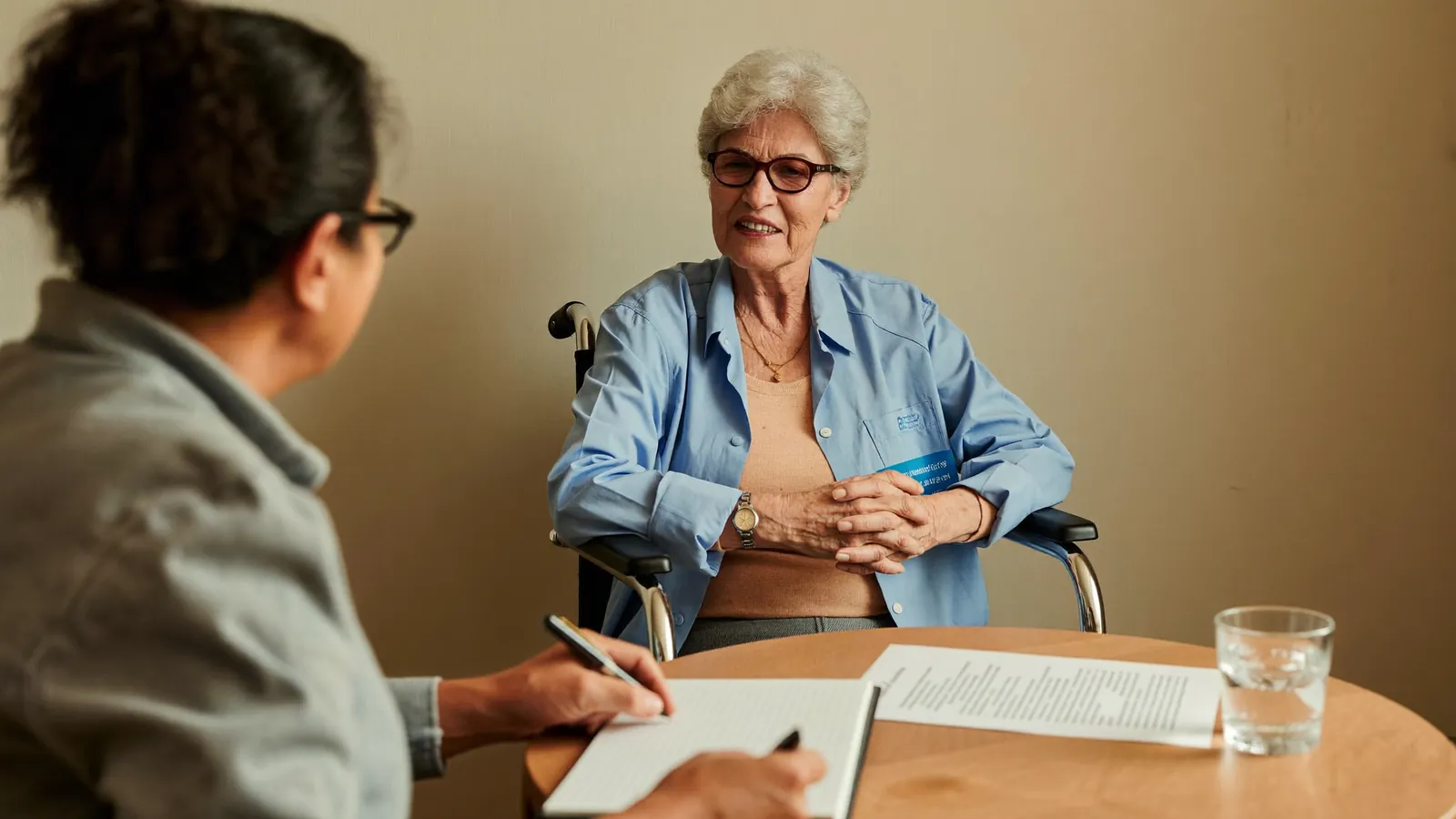
The first senior placement consultation is usually much simpler than families expect. It is not supposed to feel like a sales pitch or a test you have to pass. It should feel like a practical conversation that helps your family name the real problem, share the most important facts, and leave with a clearer idea of what happens next.
That matters because many families wait to reach out until the situation already feels urgent. When the first call goes well, it can reduce confusion quickly. This guide explains what usually happens during that consultation, what information helps, and how to tell whether the conversation is actually useful.
If you want the main service overview first, start here: Senior Placement Colorado.
What is the purpose of the first senior placement consultation?
The purpose of the first consultation is not to choose a community on the spot. It is to understand the situation well enough to decide whether the advisor can help and what the next step should be.
Above & Beyond’s Contact page says the first call is a free 15-30 minute consultation. The team learns about timeline, care needs, preferred location, and budget range, then outlines practical next steps. The site also says the call is meant to be clear and compassionate, with no sales pitch, which is exactly the right expectation for this intent.
A strong first consultation usually does three things. It clarifies what changed, it identifies the main decision factors, and it turns a vague search into a workable path.
What usually happens during the call?
Most first consultations follow a similar pattern. The advisor listens first, asks a small set of focused questions, and then explains what the likely next step looks like.
Above & Beyond says the first call covers care needs, location preferences, timeline, and budget range. The About page adds that the team starts by understanding your situation, timeline, and priorities. That matches the common SERP pattern. Other placement and advisor pages also describe the first conversation as a discovery call or introduction used to understand health, safety, daily needs, budget, and urgency before building recommendations.
Here is the most useful way to picture the call.
| Part of the consultation | What usually happens | Why it matters | What a good version sounds like |
|---|---|---|---|
| Opening context | You explain what prompted the search right now | Gives the advisor a real starting point | Tell me what changed and what feels hardest right now. |
| Needs snapshot | The advisor asks about mobility, daily support, memory, safety, and current living situation | Helps identify the likely level of support needed | What is becoming hard or unsafe day to day? |
| Search boundaries | You discuss preferred area, timeline, and budget range | Keeps recommendations realistic | What location and timing are non-negotiable? |
| Process explanation | The advisor explains how placement support works and what comes next | Turns anxiety into a sequence | Here is what we would do next if we move forward. |
| Next-step fit check | You both decide whether the advisor’s process fits the situation | Prevents rushed or vague follow-up | Based on what you shared, these are the most practical next steps. |
That table matters because families often imagine the consultation is more complicated than it really is. In most cases, it is a short alignment conversation.
What questions should families expect during the first consultation?
The first consultation should not feel random. The advisor should ask enough to understand the situation, but not so much that the call turns into a full medical intake.
Above & Beyond’s Contact page says families should share, if possible, the preferred area in Colorado, timeline or urgency, mobility and daily support needs, medications, and any memory or safety concerns. The same page also says it is okay if you do not have everything ready, because the team will guide the conversation.
That is a strong pattern for this type of call. Many other placement-service pages describe the first conversation in similar terms: what prompted the search, health and safety concerns, current living situation, support needs, finances at a high level, and what the family wants the next chapter to look like.
First-call checklist: what families should have ready
You do not need perfect information, but these details make the consultation more useful:
- what changed recently and why the search started now
- current living situation and who is helping day to day
- mobility or fall concerns
- help needed with bathing, dressing, meals, medications, or supervision
- any memory changes, wandering, or safety concerns
- preferred city, region, or distance from family
- rough timeline, even if it is just “soon” or “within a few months”
- a realistic budget range or financial comfort zone
- whether there are hospital, rehab, or discharge pressures in the background
- the family’s biggest goal, such as safety, social support, or reducing caregiver strain
The goal is not to present a polished case. The goal is to give the advisor enough truth to help.
How long is the first consultation supposed to take?
Usually, not long. Above & Beyond says its first consultation is generally 15 to 30 minutes, which is consistent with the discovery-call format used by many placement services.
That timing makes sense because the first consultation is meant to establish fit and next steps, not complete the entire placement process in one sitting. Some providers then schedule a deeper intake or planning conversation if the family wants to move forward. Silver Age Advisors, for example, describes a short introductory call followed by a more detailed intake session when it is a fit.
A short call is not a sign that the service is shallow. It is often a sign that the first step is doing exactly what it should do: orient the family without overwhelming them.
What should a good outcome of the first consultation be?
The best outcome is clarity, not commitment. By the end of the call, your family should have a better grasp of the likely path and what information or action matters next.
A good first consultation often ends with a few practical next steps. That might mean moving into a fuller intake, gathering a bit more information, narrowing the likely care path, or preparing for a shortlist of options. Above & Beyond’s pages consistently position the next step as guidance through practical options rather than pressure to decide immediately.
This is where many ranking pages are a little thin. They tell families what information to share, but they do not explain what the family should actually walk away with. A good consultation should leave you with an answer to some version of this question: “What should we do next, and why?”
If you want a first consultation that helps turn a confusing situation into practical Colorado next steps, start here: Above and beyond senior living- Contact us.
What should not happen during the first consultation?
The first call should not feel like a rushed referral handoff. If the advisor starts naming communities before learning the basics, the process may be too shallow to trust.
It also should not feel like you are being pushed to move faster than your situation requires. A helpful advisor can still be efficient, especially when the timeline is tight, but the conversation should stay grounded in your family’s actual needs and constraints.
This is one place where your own site creates a useful standard. Above & Beyond explicitly says, “No pressure. No sales pitch. Just clear, compassionate guidance.” That gives you a clean benchmark for what the first call should feel like.
What does a strong first consultation sound like in real life?
It helps to picture the consultation in realistic family situations instead of abstract advice.
Example 1: The family is overwhelmed but not yet in crisis
A daughter in Fort Collins has started noticing medication mistakes, skipped meals, and more isolation for her father. She does not know whether the situation points to assisted living or something lighter, and she feels embarrassed that she does not have every detail ready.
In a strong first consultation, the advisor helps her sort the situation into a few concrete pieces: what changed, what feels unsafe, what area of Colorado matters most, and what timeline feels realistic. The daughter leaves with a clearer understanding of the likely direction and the next step, even though no final decision is made on the call.
Example 2: The family needs a clean starting point under time pressure
A son in Denver is trying to help after a recent health setback. He is not ready for a full placement decision yet, but he needs to know whether a placement advisor can help and what information the family needs to gather first.
A strong consultation does not promise certainty too early. Instead, it gives him a structured starting point: what details matter most, what the advisor can help with, and what the immediate next step should be. That shift alone can lower stress substantially.
What mistakes do families make before or during the first consultation?
Most mistakes come from overthinking the call. Families often assume they need to prepare a perfect summary, have every number ready, or already know the right care level before reaching out.
That is usually not necessary. The stronger move is simply to come prepared with the basics and be honest about what you do not know yet.
Common mistakes and red flags
- waiting because you do not have every detail organized yet
- trying to sound more certain than you really feel about care level or budget
- leaving out important safety, memory, or medication details to keep the call simple
- focusing only on amenities or preferred communities before discussing actual needs
- expecting the advisor to make the entire decision in the first call
- treating the conversation as useful even if no clear next step is explained
- ignoring pushy or vague behavior because you are eager for relief
- assuming a quick list of community names means the consultation went well
A good first consultation should make the path clearer, not just busier.
This is paragraph text. Click it or hit the Manage Text button to change the font, color, size, format, and more. To set up site-wide paragraph and title styles, go to Site Theme.
Frequently Asked Questions
-
What happens during the first senior placement call?
Usually, the advisor asks about care needs, location preferences, timing, budget range, and what prompted the search. Then they explain the likely next steps and whether their process fits the situation.
-
How long is a first senior placement consultation?
Often around 15 to 30 minutes for the initial conversation, though some providers schedule a longer intake later if the family wants to move forward. Above & Beyond specifically states that its consultation is generally 15-30 minutes.
-
Do we need to know the exact level of care before the call?
No. The first consultation is often where families begin clarifying that. You do not need perfect certainty to start the conversation.
-
What should we have ready before the consultation?
At minimum, it helps to know the preferred area, rough timeline, mobility or daily support needs, medications, any memory or safety concerns, and a general budget range. Above & Beyond lists those items directly on its Contact page.
-
Is the first call supposed to end with a decision?
No. A good first consultation should end with clarity about what happens next, not pressure to choose a community immediately.
Ready to make the first call easier?
If you want a Colorado-based first consultation that focuses on care needs, timing, location, budget, and clear next steps, start here: Above and beyond senior living-Contact us.
Related guides
- How Senior Placement Works in Colorado: What a Senior Placement Advisor Does From First Call to Move-In
- What to Gather Before Your First Senior Placement Call
- Can a Senior Placement Advisor Help If You Already Found Communities Online?
- How assisted living works in Colorado
- More guides on working with an advisor
Related guides
What to Gather Before Your First Senior Placement Call
Bring a current medication list, recent diagnoses, mobility and memory notes, the help needed with bathing and dressing, monthly income and assets, veteran sta...
Cory Strauch · 10 min read
What If Your Loved One Won’t Talk to a Senior Placement Advisor Yet?
You can still get help. Advisors work with the family first, gather facts, and prepare options without involving your parent. Keep early conversations about sp...
Cory Strauch · 4 min read
Senior Placement for Siblings: How to Make Decisions Without Stalling the Search
Give each sibling a clear role: one lead contact, one finance person, one for records. Agree on the top three priorities before touring, use the same scorecard...
Cory Strauch · 4 min read
Read next
The main page behind our working with an advisor guides.
Continue with Working With an Advisor