
Short Term Respite Stays So You Can Rest
Respite care is a short stay in an assisted living or memory care community, usually a few days to a month, so a family caregiver can rest, travel, or recover. Colorado daily rates typically run $200 to $400, and we arrange it at no cost to you.
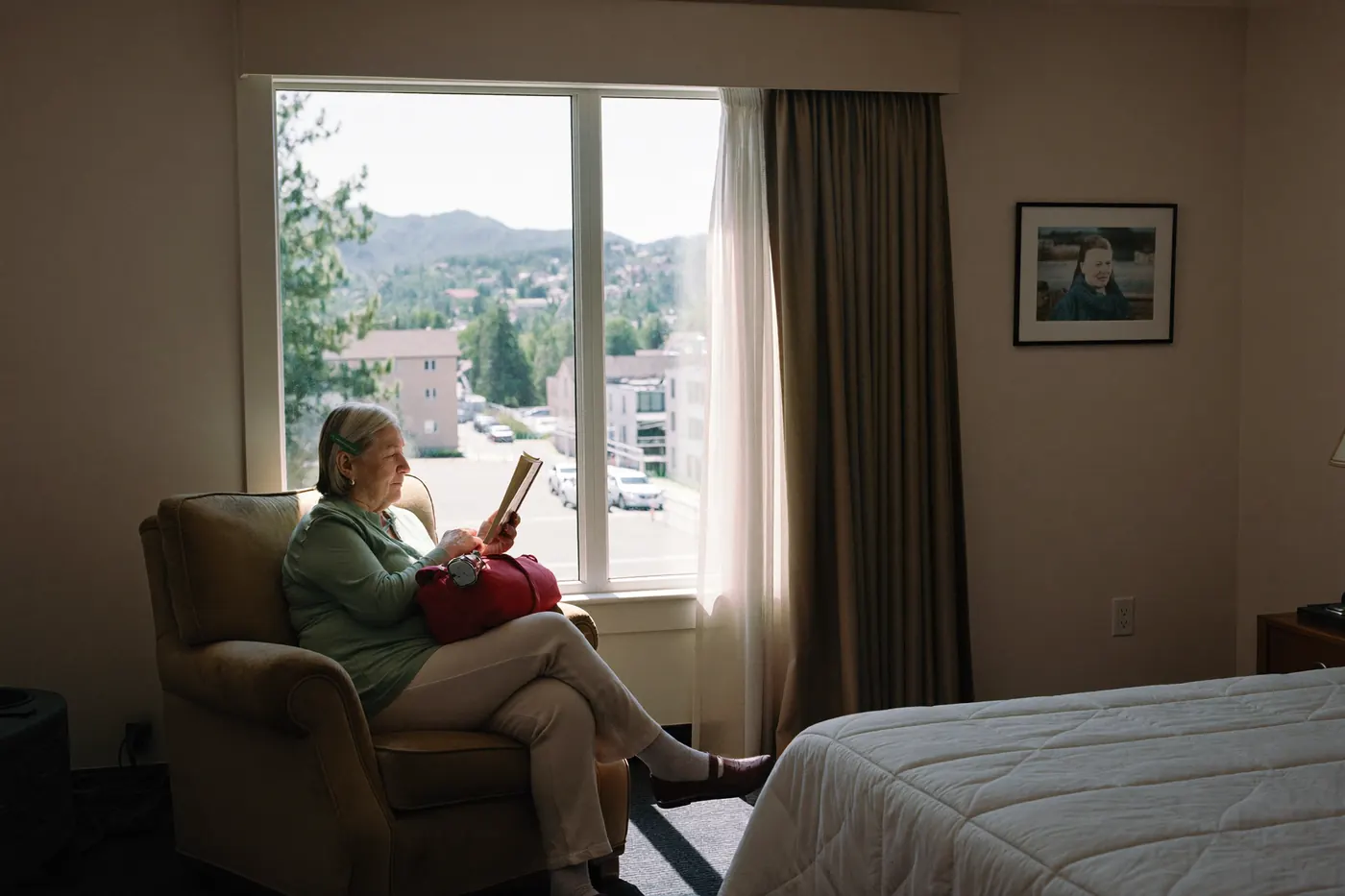
- respite care
- Respite care is a planned short term stay in a licensed community, usually between three days and thirty days, that gives a family caregiver time off while the older adult receives the same care, meals, and activities a permanent resident receives.
What is respite care and who is it for?
Respite care is a furnished apartment, a care plan, meals, and staff for a defined number of days. Your mother is treated like any other resident. She joins activities, eats in the dining room, and gets help with bathing and medications. Then she goes home, and you have slept.
Families use it for three reasons. A caregiver needs surgery or a hospital procedure of their own. A caregiver is going on a trip, to a wedding, or to a funeral. Or a caregiver has hit the wall and needs two weeks before something breaks. All three are legitimate, and the third is the most common one people are embarrassed to say out loud.
There is a fourth use that families discover by accident. A respite stay is the least risky way to try a community. Nobody sells the house, nobody signs a long lease, and everyone learns something real about how your parent does with company, structure, and three meals they did not have to make.
What are the signs a caregiver needs respite?
- You cannot remember the last night you slept straight through
- You have postponed your own doctor, dentist, or surgery
- You snap at the person you are caring for and then feel awful
- You have stopped seeing friends because leaving feels impossible
- Your own blood pressure, weight, or back has gotten worse this year
- You have thought that you cannot keep doing this, and meant it
Caregiver burnout is a health condition with a real body count. Spouses caring for a partner with dementia have measurably higher rates of illness and mortality. Taking a week is not selfish. It is what makes year three possible.
If you are in Colorado and caring for someone with dementia, pair the respite stay with a support group. Talking to five people in the same situation does something a week of sleep cannot.
What does respite care cost in Colorado?
Most Colorado communities price respite by the day, generally $200 to $400, with memory care at the higher end. That works out to roughly $6,000 to $12,000 for a full month, which is close to the monthly rate for a permanent resident, sometimes a little above it because the stay is short.
Ask what the daily rate includes. Some buildings add a one time fee for the assessment and the apartment setup. Some require a minimum stay of five, seven, or fourteen days. Some include incontinence supplies and some bill them. Get the total for the exact dates before you commit.
Payment is usually private, and it is one of the few senior living expenses that can be planned as a line item. Long term care policies sometimes include a respite benefit, so check the policy. Veterans enrolled in VA health care may qualify for VA respite care, and Colorado's Area Agencies on Aging occasionally have small caregiver respite grants.
Respite care vs in-home relief: which fits better?
In-home respite sends a caregiver to your house for a shift. It is good for a few hours, a workday, or an evening out, and it keeps your parent in familiar surroundings. It rarely gives you a true night off, because the house is still your house and you are still on call at 3 a.m.
Community respite moves the whole load somewhere else for a stretch of days. That is what you need if you are having surgery, traveling, or genuinely out of gas. It also gives your parent a change of scene, which is often better for them than families expect.
One practical tip. Book the stay before you are desperate. Good buildings hold one or two respite apartments and they fill up around holidays and Colorado ski weeks.
How do we arrange a respite stay for you?
Tell us the dates, the city, and the care needs. We call the buildings that actually take respite at that level, confirm availability for your window, and come back with two or three options and the full cost for those exact days. Most of the time we can do that in a day.
We prepare the community with the details that make the first evening go well: how your parent takes their pills, what they will and will not eat, when they nap, and the phrase that calms them down. In dementia care, those details are the difference between a good stay and a bad one.
If the stay turns into a permanent move, we handle that transition too, including our free four hour Tuck-In on move-in day. Families pay us nothing either way.
What should you look for on a tour?
For a respite stay, look at how the community treats short term residents. In a good building, respite guests are on the activity list and have an assigned caregiver. In a weaker one, they are parked in a room and checked on.
- Ask whether respite residents join activities and dining the same way
- Ask what is included in the daily rate and what is billed separately
- Ask about the minimum stay and the cancellation policy
- Ask who will call you if something changes while you are away
- Ask what furniture and supplies you need to bring
Guides for family caregivers
For the person holding this together, usually while working a job.
- Signs it is time for assisted living
- How to start the conversation with a parent
- How to choose between two communities
- What happens after you choose a community
Are you looking at this for yourself?
If you are the one being cared for, a respite stay is not a rejection. It is how you keep the person helping you healthy enough to keep helping. Many people also use it to test a community on their own terms.
Read our page written for you, not your family