
Quality Activities and Engagement in Memory Care: What Actually Matters for Your Parent's Well-Being
 Cory Strauch, CADDCT, Assisted Living Administrator, QMAPLast updated September 2, 20268 min read
Good memory care engagement fits ability, not a calendar. Look for small groups, purposeful tasks like folding or gardening, music tied to personal history, movement, and staff who join in rather than announce. Ask how activities change as a resident declines, and watch an afternoon before deciding.
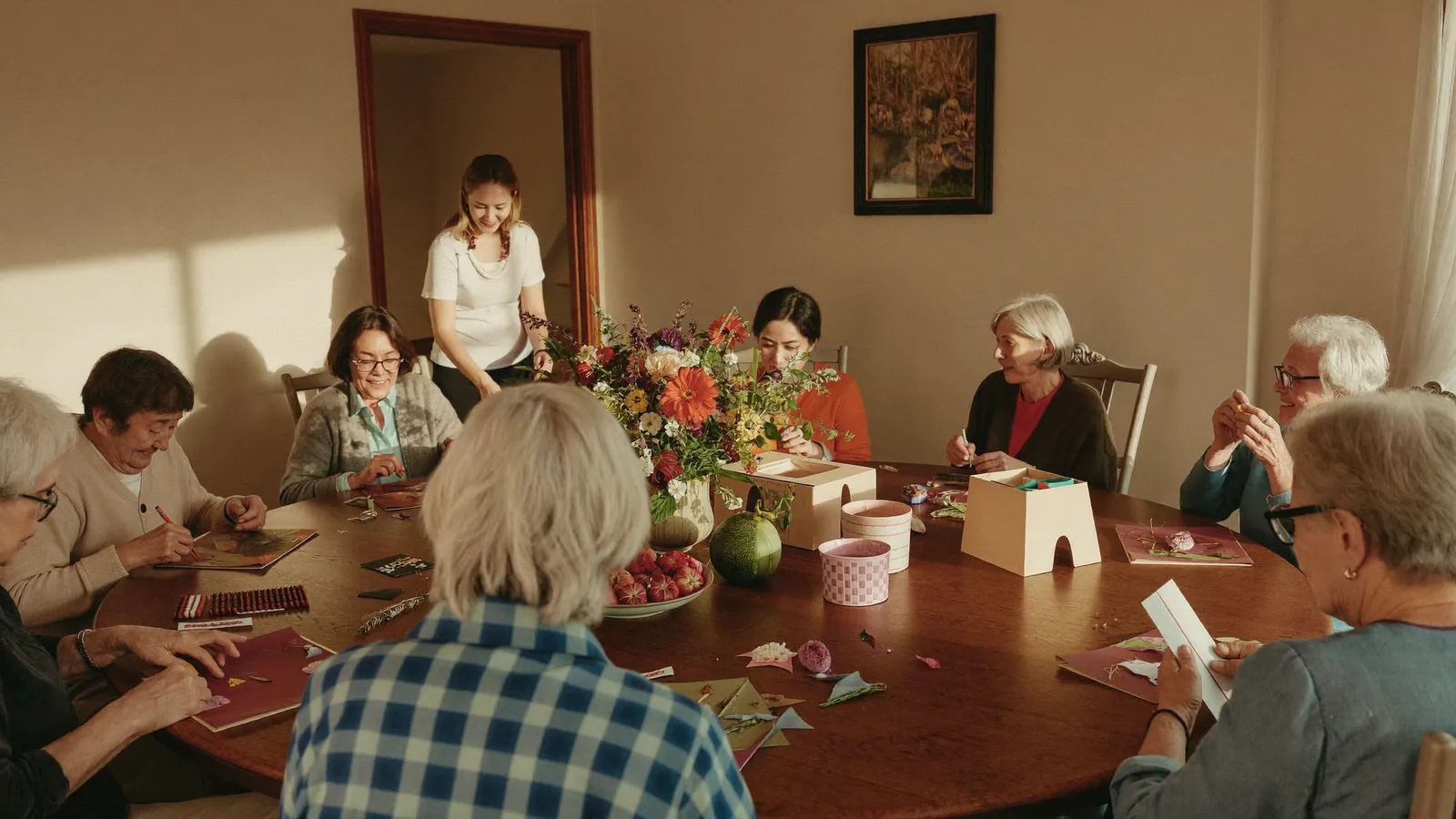
You're standing in the activities room at a Colorado memory care community. There's bingo happening, residents are sitting at tables, and the activity director smiles while announcing numbers. It looks good. But you're wondering if this is really what matters for your parent with advancing dementia. Is bingo meaningful engagement for someone who can't remember yesterday? Does it actually affect their quality of life and well-being?
The answer is more nuanced than tour brochures suggest. Memory care quality isn't just about medical oversight or safety protocols, it's about whether your parent experiences purposeful engagement, social connection, and moments of joy despite cognitive decline. This changes how you evaluate communities and what you should ask about during tours.
Why do activities matter in memory care?
Here's what research on dementia care reveals: cognitive decline doesn't mean people stop needing stimulation, purpose, or human connection. In fact, as short-term memory fades, the emotional and sensory experiences become what stick with your parent. They may not remember the visit tomorrow, but they remember how they felt, engaged, connected, frustrated, or alone.
Quality activities in memory care serve several critical functions. They reduce behavioral issues like agitation, wandering, and aggression, not through medication alone, but through meaningful engagement that gives structure and purpose to the day. They support emotional well-being by creating moments of joy or accomplishment. They maintain whatever abilities remain longer by providing cognitive and physical stimulation. And they give families something crucial: the sense that their parent is living, not just existing.
This is where many Colorado communities fall short. They treat activities as a compliance checkbox, we offer programs, so we've checked the box. But meaningful activities require staff time, specialized understanding of dementia, and individualization. A memory care unit can't run one generic bingo game and expect it to work for everyone. Someone with advanced dementia may never understand bingo rules. But they might light up during a sensory activity: feeling the texture of silk scarves, listening to familiar music, smelling lavender, or sorting colored objects.
The communities that invest in quality activities assign dedicated staff, offer multiple types of programming daily, and adapt activities for different cognitive levels. These communities see fewer behavioral crises and residents with better emotional stability.
Which activities really work in memory care?
When you tour a memory care unit, ask what specific activities they offer and why. Not all activities are equal for dementia. Here are categories that research supports as effective for cognitive decline:
Sensory activities engage the senses directly, music therapy, aromatherapy, textured crafts, or hand massages. These work for people at any stage of dementia because they don't require memory or abstract thinking. Someone with late-stage Alzheimer's might not participate in traditional art class. But they'll respond to painting with their hands or feeling different textures. Ask if the community has access to sensory bins, music therapy, pet therapy, or massage services. Are these offered regularly or occasionally?
Reminiscence activities tap into long-term memory, which stays longer than recent memory. Looking at old photos, discussing life events, or listening to music from their era engages your parent in their own history. This builds connection and can be deeply satisfying. Quality communities create memory books for residents and use them during one-on-one time. They play music from specific decades and eras. Does the community gather family information to personalize reminiscence activities?
Validation activities respect the person's current reality, even when it differs from ours. If your parent with advanced dementia thinks it's 1975, harsh correction ("that's wrong, it's 2026") causes distress. Validation responds to their emotion while gently redirecting. A trained staff member doesn't argue but acknowledges the feeling: "You sound like you're remembering something important" or redirects: "Let's look at these photos together." This is a skill trained caregivers develop. Does the community teach validation techniques?
Physical activities maintain ability and health, gentle exercise, walking, gardening, or yoga adapted for mobility levels. These reduce falls, support cardiovascular health, and provide structure. Outdoor time especially matters; natural light and fresh air improve sleep and mood. Ask about outdoor space, supervised garden access, and movement programs adapted for different mobility levels.
Social activities provide connection, which combats the isolation many dementia residents experience. Group meals, group activities, or consistent one-on-one time with staff builds relationships. For your parent, knowing a specific caregiver by name and building trust with them matters more than event attendance. Do staff spend meaningful time with residents, or do they only facilitate activities?
Why are one size fits all activities a red flag?
Here's a critical sign of a struggling memory care unit: the same activity for everyone, regardless of ability. If the activity calendar shows "bingo at 10am for all residents," that's not individualized care. Some residents will benefit; others will sit confused and frustrated because they don't understand the game anymore.
Quality communities offer choice and modification. They might have morning options: bingo for those who can play games, a music listening group for those who prefer passive engagement, and a sensory activity for those who need tactile or visual stimulation. Staff know residents well enough to match activities to interests and abilities. Your parent who loved gardening participates in garden work. Your parent who was a musician listens to live or recorded music. Your parent with late dementia might sort colorful objects or feel different textures.
Ask directly: "How do you match activities to residents' interests and abilities?" A good community will say something like, "We assess each resident's interests, abilities, and preferences, and staff adjust programming. We offer multiple activities at the same time so residents can participate at their level." A weak answer: "We offer activities throughout the day for anyone who wants to participate."
Also ask about personalization outside formal programming. Do caregivers spend one-on-one time with residents doing things they enjoy? Does your parent get to listen to their favorite music, look at family photos, or sit outside if they want? The best memory care units support these individual preferences, not just group activities.
How do staffing and routine shape activities?
This is crucial: good activities need dedicated staff. A memory care community where the activities director quit last month and "whoever has time" runs programs is in trouble. Activities require continuity, training, and someone accountable for quality.
Ask about activities staffing. Is there a dedicated activities director? How many caregivers support activities? Do the same people facilitate activities, or is it inconsistent? Your parent builds relationships with caregivers. If a staff member leaves monthly, your parent loses that connection repeatedly, devastating for someone with dementia who may not understand why their friend is gone.
Also ask about training. Do staff receive dementia-specific training on engagement techniques, behavioral support, or validation? A community investing in staff education tends to provide better activities and better overall care.
What works at each stage of dementia?
Memory care isn't one-size-fits-all. Your parent's needs change as dementia progresses. A quality community adjusts programming as abilities decline. Early-stage dementia residents might participate in traditional activities, art classes, book clubs, trivia. Mid-stage residents need more support and simpler activities. Late-stage residents need sensory, reminiscence, and comfort-focused activities.
A community housing all dementia stages should offer tiered programming. Some residents enjoy an exercise class; others are wheeled in to listen to the music. Some participate in a cooking activity; others watch or sort ingredients. The same activity can work for different abilities with modifications.
Ask how the community adjusts as residents' cognitive abilities decline. Do they modify activities or move residents out when their needs change? (Moving out is often code for "we can't handle advanced dementia," which is a red flag.)
How can family join in activities?
Quality memory care communities encourage family participation in activities. You might join your parent for an activity day, participate in celebrations, or bring in familiar items that support engagement. This serves two purposes: it enriches your parent's experience with familiar loved ones. And it gives you visibility into whether programming is actually meaningful.
Ask if families can join activities, if there are intergenerational events (kids visiting for a program), or if you can bring in special items your parent enjoys. Can you share your parent's life story, preferences, and interests with the activities team? A community that welcomes your involvement sees you as a partner in care, not an interruption.
What signs mean the activities are not working?
During tours or visits, watch for warning signs that activities aren't actually supporting your parent's well-being. If you notice residents zoned out during programming, sitting alone throughout the day, or if staff seem stressed and rushed during activities, engagement isn't a priority.
Also pay attention to behavioral changes in your parent. If they're increasingly agitated, withdrawn, or difficult to manage, inadequate engagement might be part of the problem. Ask the care team: what activities is your parent participating in, and how often? What specific interests are they engaging? If the answer is vague or unchanging week to week, push back. Activities should be personalized and documented.
If a community consistently runs the same generic programming for everyone with no adaptation. And staff can't tell you what your specific parent is doing, that's a serious red flag about care quality overall.
How should you use this?
When evaluating memory care communities, activities are a window into overall care quality. Communities serious about well-being invest in activities, train staff, and personalize engagement. Communities cutting corners skip activities or run minimal programming.
During your tour, spend time in the activities room. Watch how staff interact with residents. Ask specific questions about how they match activities to your parent's interests. Request to see the activity calendar and understand how it's individualized. If possible, visit at different times to see what's actually happening versus what's on paper.
Your parent with dementia may not remember the activity tomorrow, but they'll experience it today. Quality engagement, whether it's a structured class or a quiet moment with a caregiver playing their favorite song, affects their daily well-being, behavior, and emotional health. It's not a luxury; it's essential care. Choose a community that understands this.
Related guides
- Early Signs of Dementia in Aging Parents: What Colorado Families Should Watch For
- Stages of Dementia: A Colorado Family's Guide to What Each Stage Means for Care
- How Dementia Care Needs Change: Understanding Transitions Between Care Levels
- What memory care looks like in Colorado
- More guides on dementia and memory care
Related guides
Early Signs of Dementia in Aging Parents: What Colorado Families Should Watch For
Early dementia often shows up as repeated questions, missed bills, misplaced items, trouble with familiar routes, word finding pauses, poor judgment, and withd...
Cory Strauch · 10 min read
Stages of Dementia: A Colorado Family's Guide to What Each Stage Means for Care
In early dementia, most people stay home with reminders and supervision. In the middle stage, help with bathing, dressing, and safety grows daily, and memory c...
Cory Strauch · 10 min read
How Dementia Care Needs Change: Understanding Transitions Between Care Levels
Care needs shift when wandering, night waking, aggression, weight loss, falls, or refusal of help start showing up. Those signals mean supervision and staffing...
Cory Strauch · 6 min read
Read next
The main page behind our dementia and memory care guides.
Continue with Dementia and Memory Care