
Stages of Dementia: A Colorado Family's Guide to What Each Stage Means for Care
 Cory Strauch, CADDCT, Assisted Living Administrator, QMAPLast updated September 2, 202610 min read
In early dementia, most people stay home with reminders and supervision. In the middle stage, help with bathing, dressing, and safety grows daily, and memory care often fits. In late dementia, care is hands on around the clock. Plan one stage ahead so moves are not made in a crisis.
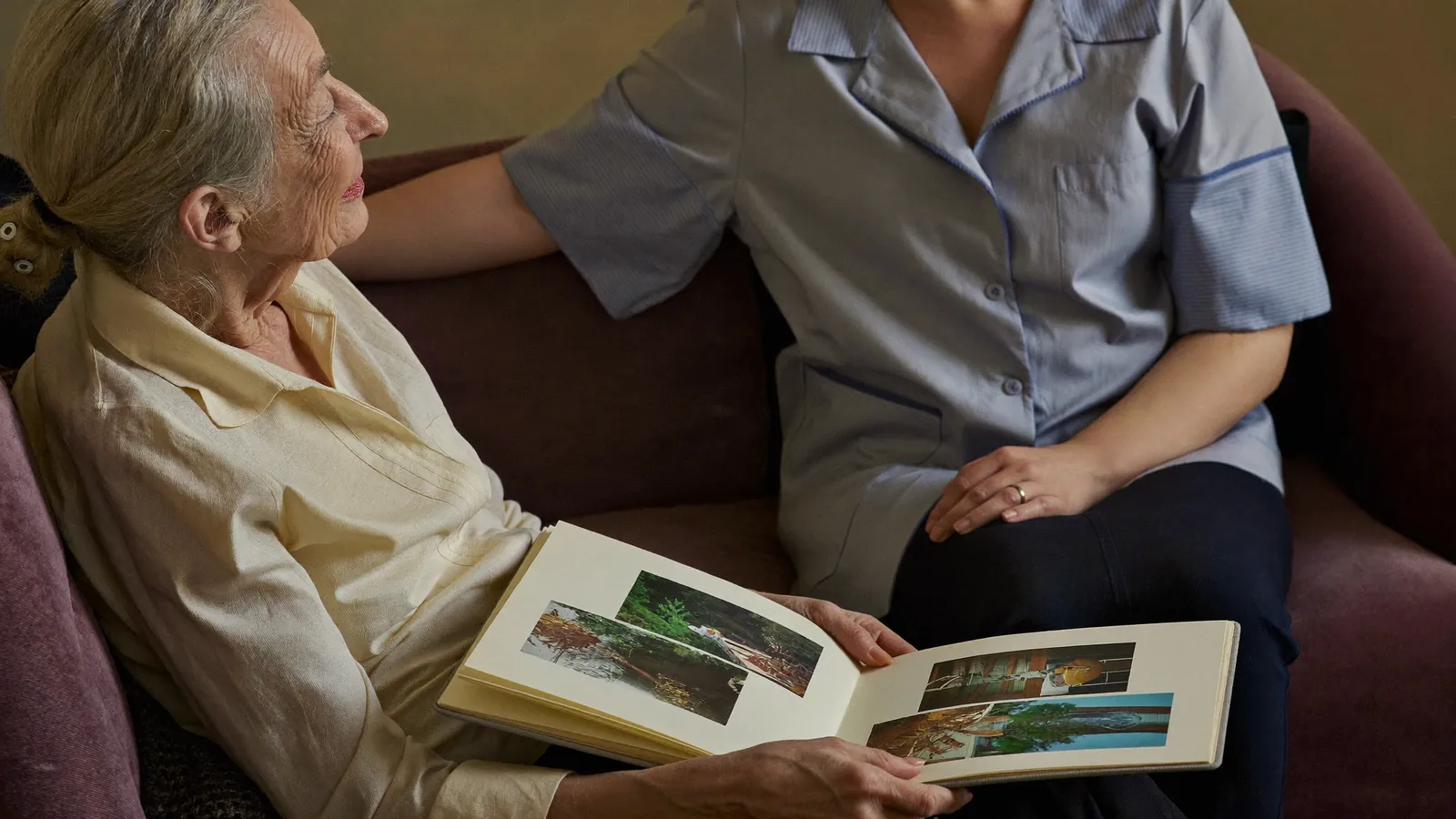
If your mom forgot the name of her own street last weekend, or your dad asked the same question four times before lunch, you are probably reading articles like this one in the late hours and wondering what is happening, what is coming, and what you are supposed to do next. We talk with Colorado families in this exact place every week. The most useful thing we can offer at the start is not a list of products or facilities, but a map. Once you can see where your loved one likely is on the dementia journey, decisions about care stop feeling random and start feeling like a sequence you can plan.
Dementia is an umbrella term for changes in memory, thinking, language, and daily function caused by a number of underlying diseases. Alzheimer's disease is the most common cause, but Lewy body dementia, vascular dementia, frontotemporal dementia, and mixed dementias are all part of the picture too. According to the Alzheimer's Association, clinicians often talk about dementia in three broad stages: early, middle, and late. That framework is what we will use here, with notes on what tends to be true at each stage and what kind of care setting usually fits.
This guide is written for families, not clinicians. It will not diagnose anyone, and it is not a substitute for medical advice. What it will do is help you recognize the patterns we see in Colorado families every day, understand how care needs typically shift, and know where to turn when the load gets heavier than your family can carry at home.
How is dementia staged?
Most clinicians use one of two more formal scales alongside the simple early, middle, late language. The Global Deterioration Scale (GDS) breaks decline into seven stages, from no impairment to very severe decline. The Functional Assessment Staging Tool (FAST) goes further and ties each stage to specific functional milestones, things like the ability to manage finances, dress independently, or recognize close family. Hospice and palliative teams often use the FAST scale to help families understand prognosis when dementia is advanced.
You do not need to memorize either scale. What is useful to know is that staging is not a perfect predictor. Two people can sit at the same numeric stage and look completely different on a Tuesday afternoon. One may be calm and content with light reminders, while the other is agitated and unsafe alone for even an hour. Stage gives you a center of gravity. The lived reality is what guides the placement decision.
That is why our team at Above & Beyond Senior Living spends so much time on intake conversations before we ever recommend a community. We are looking for the day-in, day-out picture: what your loved one can still do well, what is getting harder, where the risk lives, and how the family system is holding up. Stage is one input. The full picture matters more.
What do families notice first in early stage dementia?
Early-stage dementia is often the longest stage, and also the one families second-guess the most. The person you love still drives to the store, still pays the water bill, still tells the same stories at Sunday dinner. But you start noticing the smaller things. Word-finding pauses. The same question twice in twenty minutes. A check written for the wrong amount. A pot left on the stove. A missed appointment that used to be unmissable.
At this stage, most people can live safely at home with support. The right care often looks like a stronger family check-in routine, a medication management system, simplified finances, and a hard look at driving. Some families add in-home help a few times a week. Others choose independent living or a "lighter touch" assisted living community that allows their loved one to settle in before more support is needed. If you are weighing those options, our breakdown of independent living vs assisted living in Colorado walks through what each setting actually delivers.
Early stage is also the best time to make plans your loved one can take part in. Healthcare directives, financial power of attorney, conversations about what matters to them about where they live, what kind of routines feel meaningful, what they would not want. Families who do this work in the early stage carry far less guilt later, when decisions get harder. If your loved one is dragging their feet about even having the conversation, our piece on what to do when a loved one will not talk to a placement advisor yet may help.
When does safety become the main question in middle stage dementia?
The middle stage tends to be the longest stretch of obvious decline and the one that exhausts family caregivers. Memory loss deepens. Language gets harder. Sleep patterns shift. New behaviors show up that the person never used to have: pacing, repeating, becoming suspicious of people they love, wandering away from familiar places. Daily tasks like bathing, dressing, and eating start needing prompting or hands-on help.
This is the stage where home care often stops being enough. Not because families are not trying hard, but because the math of safety changes. One adult child cannot be awake all night and at work all day. A spouse with their own health issues cannot lift, redirect, and supervise twenty-four hours a day. The risk of falls, kitchen accidents, medication mistakes, and elopement (leaving home unsafely) climbs sharply. If you are seeing the patterns we describe in our post on 10 signs it is time for assisted living in Colorado, your family is likely in the middle of this stage.
Care choices at this stage usually come down to assisted living with strong dementia training, a stand-alone memory care community, or, in some cases, intensive in-home care with overnight coverage. The right answer depends on how advanced the behavioral changes are, how the person responds to a structured environment versus their own home, and what the family budget can support over time. Our comparison of assisted living vs memory care in Colorado goes deeper into the five core differences between the two settings.
When does care become around the clock?
Late-stage dementia is the period when a person needs full assistance with the basic activities of daily living. Walking gets harder, then unsafe. Swallowing can change. Words may shrink to a handful, then to a few sounds, then to none. Recognition of even close family members can come and go. The person you love is still in there, often reaching you through music, touch, familiar smells, and a hand held the right way. But the body of care work is now constant.
At this stage, care almost always belongs in a setting equipped for it. That may be a memory care community with hospice support, a skilled nursing facility, or a smaller specialty home that does end-stage dementia care well. Many families pair the residential setting with hospice services to add comfort care, medication management for pain and agitation, and family support. The National Institute on Aging has good plain-language guidance on what end-of-life care for dementia typically looks like and how to think about comfort versus aggressive treatment.
Families often arrive at this stage already weary, and choices about care setting can feel impossible after years of decisions. Our role at Above & Beyond Senior Living is to take the search work off your plate when we can, advocate for what your loved one needs, and connect you with hospice partners we trust. If a hospital stay or sudden decline triggered this conversation, our hospital discharge checklist for Colorado seniors can help you think through the next 48 hours.
Why does the stage alone not decide the setting?
A common mistake we see is families trying to match a stage number to a care setting like it is a formula. Stage four equals assisted living. Stage five equals memory care. Stage seven equals skilled nursing. Real life is messier. We have placed people with early-stage dementia into memory care because of strong wandering or sundowning behaviors, and we have placed people with more advanced disease into a well-staffed assisted living because the community had the dementia training and physical layout to keep them safe and engaged.
Three things tend to matter more than the stage label: behavior patterns, physical care needs, and the quality of dementia care at the specific community. Behavior matters because a person who exit-seeks at 2 a.m. needs a secured environment, full stop, regardless of stage. Physical care matters because someone who needs two people to transfer cannot be safely supported in a community that staffs for one-person assists. And community quality matters because the words "memory care" on a brochure mean very different things in different buildings. Tours, references, and a trained eye are how families tell the difference.
This is the work our team does. Above & Beyond Senior Living is Colorado's senior living placement agency, with a team of former senior living administrators, licensed nurses, and certified dementia practitioners. We have walked the hallways. We know which Colorado communities staff their memory care neighborhoods well, which ones manage behaviors with skill instead of medication, and which ones quietly underdeliver. Families do not pay us. Communities do, only after a successful move-in. You can read more about how that works in our explainer on whether senior placement is really free in Colorado.
How does Above & Beyond Senior Living help?
Families come to us at every stage. Sometimes it is an early-stage conversation about planning ahead. Sometimes it is a middle-stage crisis where a parent has wandered, fallen, or burned out the primary caregiver. Sometimes it is the late-stage call after a hospital stay when discharge is happening fast. Wherever you are, we can help you understand the stage, look honestly at care needs, and shortlist Colorado communities that genuinely fit.
Beyond placement, our team also runs Dementia 101, a beginner-friendly class for families that covers the basics of dementia, communication strategies that actually work, and how to respond to common behaviors without making them worse. For caregivers who need ongoing community, our dementia caregiver support groups in Colorado meet on a recurring basis and are free to attend. Many of the families we help start with one of these resources and bring us into the placement conversation when the time is right.
If you are not sure where to start, that is fine too. A short, no-pressure phone call is often enough for us to help you see the next two or three steps clearly. There is no cost to families, no obligation, and no pressure to move toward placement before it is right.
What to Do Next
Dementia is a long road, and no two families walk it the same way. But staging gives you a way to read the map, anticipate what is coming, and avoid the common mistake of waiting until a crisis forces a decision in 48 hours. If you are reading this in the middle of the night because something just changed, give yourself credit for paying attention. That instinct is what brings families to the right care at the right time.
When you are ready to talk through what you are seeing, we are here. You can book a free consultation with our team, or reach Cory directly. We will listen first, ask the questions that matter, and help you understand your loved one's options without selling you on a community before we know your story.
About the author: Cory Strauch is Co-Owner of Above & Beyond Senior Living and a Certified Dementia Trainer and Eden Certified Practitioner. He has spent more than two decades inside senior living communities as an administrator and dementia educator, and now leads Above & Beyond Senior Living, Colorado's senior living placement agency. Free, no-cost placement guidance for assisted living, memory care, independent living, skilled nursing, and respite care communities statewide.
This article is educational and is not medical or legal advice. For diagnosis, treatment, or medication questions, please consult your physician or a licensed healthcare provider.
Related guides
- Early Signs of Dementia in Aging Parents: What Colorado Families Should Watch For
- How Dementia Care Needs Change: Understanding Transitions Between Care Levels
- Quality Activities and Engagement in Memory Care: What Actually Matters for Your Parent's Well-Being
- More guides on dementia and memory care
- Our dementia programs and support groups
Related guides
How Dementia Care Needs Change: Understanding Transitions Between Care Levels
Care needs shift when wandering, night waking, aggression, weight loss, falls, or refusal of help start showing up. Those signals mean supervision and staffing...
Cory Strauch · 6 min read
Quality Activities and Engagement in Memory Care: What Actually Matters for Your Parent's Well-Being
Good memory care engagement fits ability, not a calendar. Look for small groups, purposeful tasks like folding or gardening, music tied to personal history, mo...
Cory Strauch · 8 min read
Early Signs of Dementia in Aging Parents: What Colorado Families Should Watch For
Early dementia often shows up as repeated questions, missed bills, misplaced items, trouble with familiar routes, word finding pauses, poor judgment, and withd...
Cory Strauch · 10 min read
Read next
The main page behind our dementia and memory care guides.
Continue with Dementia and Memory Care