
Assisted Living vs Memory Care in Colorado: 5 Key Differences and How to Choose
 Cory Strauch, CADDCT, Assisted Living Administrator, QMAPLast updated September 2, 202611 min read
Assisted living helps with daily tasks in an open community. Memory care is a secured setting with higher staffing, dementia trained caregivers, simpler layouts, and structured routines. Many Colorado communities house both, so ask about supervision, door safety, and behavior support. Choose for the next twelve months, not only today.
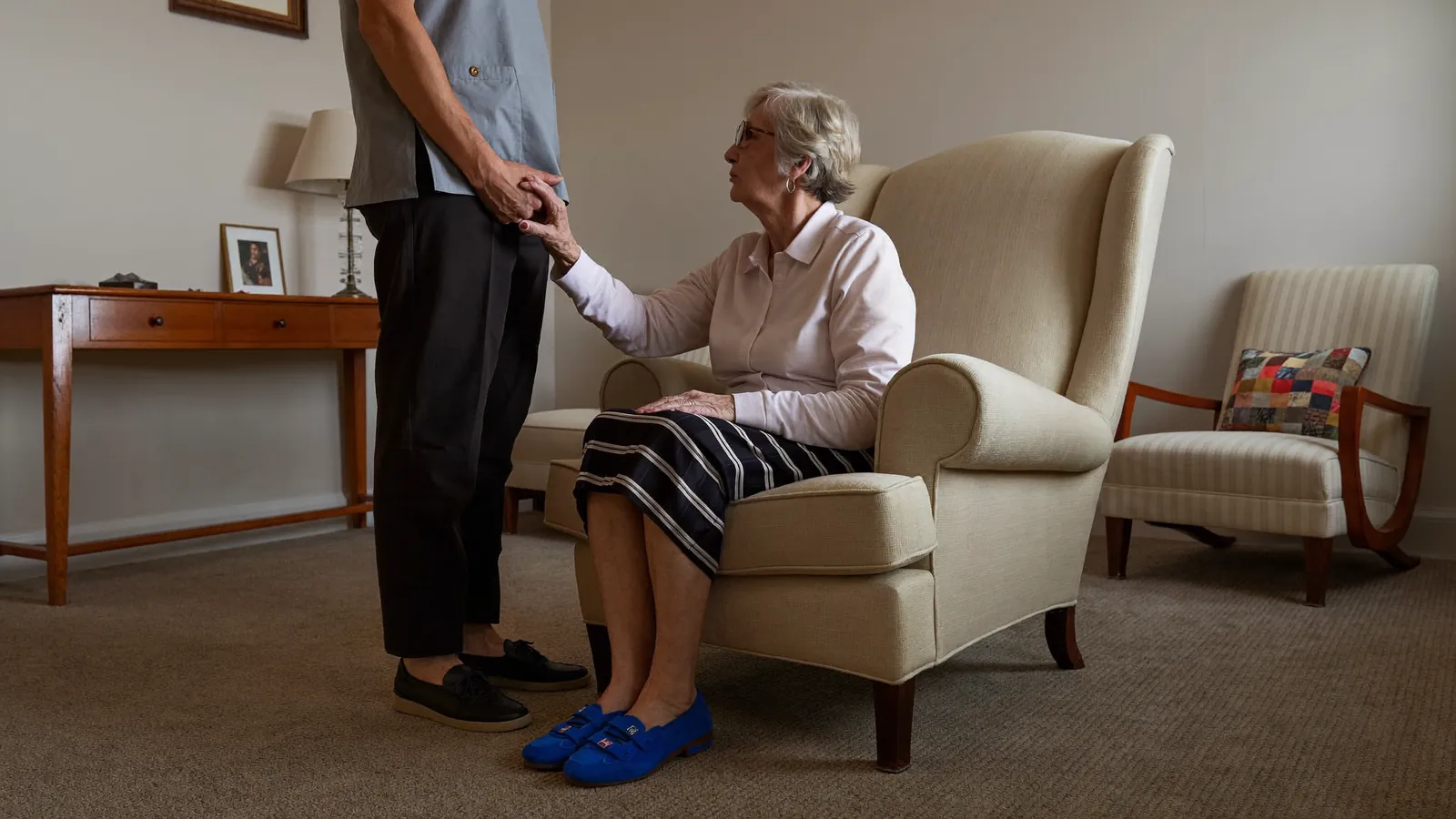
The short version
One of the hardest questions families bring to us sounds simple on the surface: does Mom need assisted living, or does she need memory care? The two get used almost interchangeably in conversation. But they are different levels of care, with different staffing, different environments, and different costs. Choosing the wrong one can mean a second move within months. That is Hard on everyone, especially someone living with memory loss.
The good news is that the line between the two is usually clearer than it feels when you are in the middle of it. Below is the same framework we walk Colorado families through when they are trying to tell which level of care actually fits.
If you’re weighing assisted living vs memory care, you’re usually not comparing “two buildings.” You’re comparing two levels of supervision, staffing focus, and safety design. And you’re trying to predict what your loved one will need not only today, but in the next 6-12 months.
This decision is confusing for one big reason: assisted living and memory care aren’t always separate places. Memory care is often a dementia-focused “special care unit” that can exist inside assisted living (and other residential settings). The environment may be secured or not. And the level of dementia-specific programming varies, so it’s critical to ask targeted questions. Alzheimer’s Association
This guide gives you a decision framework, a checklist you can use right away, and a Colorado-specific “trust block” so you know where to verify information and what to do if concerns arise.
What the terms actually mean (the definitions that change your decision)
Assisted living: a bridge between independence and nursing home care
The Alzheimer’s Association describes assisted living as a setting that usually offers housing, meals, supportive services, and health care, bridging the gap between living independently and living in a nursing home. It also notes assisted living is not regulated by the federal government and definitions vary by state, and not all assisted living providers offer dementia-specific services. Alzheimer’s Association
In practical terms, assisted living can be a great fit when your loved one needs consistent help with daily tasks (like bathing, dressing, medication support, meals, and routine) but does not need 24/7 skilled nursing-level medical care.
Internal support page: Assisted living placement in Colorado
Memory care: dementia-focused “special care units” inside residential communities
Memory care commonly refers to Alzheimer’s special care units (SCUs), also called memory care units. The Alzheimer’s Association explains these units are designed to meet dementia-specific needs, can exist within various residential care communities (including assisted living), and may or may not be locked/secured. It also emphasizes that because laws and services vary, families should ask specific questions to ensure the level of care is appropriate. Alzheimer’s Association
This is the key shift: memory care is usually less about “nice amenities” and more about supervision, safety design, and dementia-specific routines.
Memory care placement in Colorado
If dementia is part of your situation:
Quick decision table: which setting fits which needs?
Use this table to orient your decision. It’s not a diagnosis tool, it’s a “best fit” map so you can ask the right questions.
Assisted living vs memory care vs skilled nursing vs respite (comparison table)
| Setting | Best fit when… | Supervision level | Environment & staffing focus | Common “move up” trigger |
|---|---|---|---|---|
| Assisted Living | Needs help with ADLs, meds, or meals but can follow routines with reminders | Moderate | Supportive services plus daily structure | Increasing safety risk, nighttime confusion, or need for constant cueing |
| Memory Care (SCU) | Dementia-related safety or supervision needs are primary (wandering, unsafe exits, high cueing needs) | High | Dementia-specific staffing, routines, and safety design; may be secured | 24/7 supervision becomes necessary; caregiver capacity or safety risk |
| Skilled Nursing (SNF) | Around-the-clock medical treatment or rehab needs | Very high | Clinical care plus nursing oversight | Complex medical needs, rehab intensity, wound care, etc. |
| Respite / Short-term stay | Trial period, transition bridge, caregiver burnout, or post-hospital stabilization | Varies | Short-term support while planning next steps | Used to buy time and reduce crisis pressure |
For dementia-specific residential care selection and what to ask, the Alzheimer’s Association provides both a long-term care guide and a dedicated PDF with structured questions. Alzheimer’s Association+1
The safety-based checklist: signs assisted living may still fit vs signs memory care may be safer
This is the part families wish they had earlier: a way to decide based on observable needs, not guilt or pressure.
Checklist table (save this)
| Signs assisted living may still be appropriate | Signs memory care may be a better fit |
|---|---|
| Needs help with some ADLs (bathing/dressing) but can accept prompts | Needs frequent cueing and redirection most days |
| Medication support needed, but no repeated unsafe incidents | Medication safety issues and repeated confusion create risk |
| No wandering or exit-seeking behavior | Wandering, getting lost, unsafe exits, or repeated looking for home |
| Can recognize caregivers or staff most of the time | Struggles to recognize setting, gets disoriented, higher distress |
| Nighttime is mostly stable | Nighttime confusion (sundowning), unsafe nighttime activity, poor sleep patterns |
| Family caregiver stress is manageable | Caregiver health or safety is at risk or supervision needs exceed capacity |
The Alzheimer’s Association notes that there may come a time when more care is needed than can be provided at home and that during the middle stages of Alzheimer’s it becomes necessary to provide 24-hour supervision to keep the person with dementia safe. It also offers decision prompts like whether the person is becoming unsafe at home and whether caregiver health is at risk. Alzheimer’s Association
If you want help clarifying the safest level of care and building a Colorado short list, start here:
What changes between assisted living and memory care in real life?
Many families assume the difference is “a locked door.” Sometimes it is. Often it’s more than that.
In memory care, you’re usually paying for:
- Higher supervision (especially in evenings/nights)
- Dementia-specific routines (reducing anxiety and confusion)
- Environment design that supports wayfinding and safety
- Staff training and programming matched to cognitive ability
The Alzheimer’s Association emphasizes that assisted living isn’t federally regulated and not all providers offer dementia-designed services. That is Why the “what exactly is provided?” conversation is essential. Alzheimer’s Association
Tour questions that actually help you choose (not just “nice to know”)
A polished tour can make almost any place look good. Your job is to ask questions that reveal whether the community can support your loved one on their hardest day.
The Alzheimer’s Association long-term care guidance highlights factors to consider such as staffing, environment, programs. And the type of care provided, and it provides specific question categories. Alzheimer’s Association+1
Ask these questions on every tour (memory care and assisted living)
Family involvement
- How are families involved in care planning?
- How are changes in condition communicated?
Staffing
- What coverage looks like evenings/weekends?
- How are dementia-related behaviors handled (redirection, agitation, distress)?
Environment & safety
- Is the unit secured? If not, what safety systems exist?
- How do you prevent falls and unsafe exits?
Programming
- What does a typical day look like for someone at my loved one’s stage?
- What happens if someone refuses activities or becomes overwhelmed?
Transitions
- If needs increase, what are the next steps (within the community or transfer out)?
- How do you support adjustment in the first 2-4 weeks?
If dementia is part of your situation, these internal resources can support your prep:
- Dementia 101
- Dementia caregiver support groups in Colorado
- CDP training for teams (helpful credibility context when asking about training culture)
When it’s time to transition (assisted living → memory care)
Families often wait for a major incident because the transition feels emotionally heavy. A more sustainable approach is to watch for supervision threshold changes, when your loved one’s needs can’t reliably be supported with “check-ins” and reminders.
Common transition signals:
- Repeated disorientation that leads to unsafe choices (exits, stove, wandering)
- Frequent nighttime confusion or unsafe nighttime activity
- Escalating need for constant cueing and redirection
- Anxiety/distress that improves with routine but worsens in unstructured settings
- Caregiver health and safety risk becomes a factor
The Alzheimer’s Association explicitly frames the decision around safety and caregiver capacity, and it notes the middle-stage supervision requirement. Alzheimer’s Association
Colorado trust block: how to verify information and where to go for help
This section is here because families often don’t know what exists until they need it.
Verify assisted living (and find official consumer resources)
Colorado’s CDPHE provides an Assisted Living Residence consumer resources page that references an involuntary discharge notification form and notes you can contact your local ombudsman for assistance.
CDPHE also maintains an “Occurrences & health facility reported incidents” page that points consumers to tools to view occurrence summary reports and survey inspection results.
If you have concerns: CDPHE complaints
CDPHE states it accepts anonymous complaints and explains that while investigators don’t share your name unless you instruct them otherwise, the facility may infer identity based on the nature of the complaint. It also notes anonymous complaints must include enough detail because they can’t contact you for more information.
Ombudsman support in Colorado
Colorado’s Long-Term Care Ombudsman Program describes itself as advocating for residents of skilled nursing homes and licensed assisted living residences, with the purpose of promoting and protecting residents’ rights. The Colorado ombudsman site also states residents’ rights cover all aspects of a stay, from admission through discharge.
If skilled nursing is involved: use Medicare Care Compare and Five-Star (for questions, not “final answers”)
NIA recommends using Medicare’s Care Compare tool to find and compare nursing homes and other health care facilities, and also mentions the Joint Commission Quality Check for quality review. Medicare describes Care Compare as a tool to find and compare Medicare providers, including nursing homes. CMS explains the Five-Star Quality Rating System has an overall rating plus separate ratings for health inspections, staffing, and quality measures, useful for identifying where to ask questions.
Costs and payment (high-level, no surprises)
Costs vary widely by location, care needs, and the community’s pricing model. The safest way to plan is to request a written fee sheet and ask what triggers care level changes.
The Alzheimer’s Association notes most families pay for long-term care out-of-pocket, some benefits may cover nursing care (like long-term care insurance, Veterans benefits, and Medicaid). And that Medicare does not cover residential care community costs (it covers short-term skilled care after a hospital stay).
Two real-world scenarios (what the decision looks like in practice)
Scenario 1: “Needs help, but safety is stable”
A dad is forgetting medications and needs help with meals and bathing. He’s lonely and his home maintenance is slipping. He’s not wandering, he sleeps through the night, and he accepts reminders without distress.
A strong next step is assisted living, if the community can clearly explain medication support, care tiers, and how reassessments work. The family uses the tour questions above. And they also plan for what would trigger a future transition if cognition changes.
Helpful internal links: Assisted living, Placement hub
Scenario 2: “Supervision threshold changed”
A mom has increasing nighttime confusion and has tried to leave the home “to go to work” or “go find her parents.” She becomes distressed when corrected. Family members are rotating shifts to supervise, and burnout is escalating.
This is where memory care often becomes the safer fit, not because assisted living is “bad,” but. That is because The supervision and environment needs are different. The family tours memory care with targeted questions about staffing coverage, redirection approach, daily routine, and how they handle exits and nighttime safety.
Helpful internal links: Memory care, Dementia 101, Support groups This aligns with the Alzheimer’s Association guidance that 24-hour supervision becomes necessary in the middle stages for safety.
Common mistakes and red flags
- Choosing based on décor/location instead of matching supervision level to needs
- Assuming all assisted living includes dementia-specific services (it often doesn’t) Alzheimer’s Association
- Not asking how the community handles distress, redirection, and nighttime safety
- Not planning for a transition trigger (so the next move happens in a crisis)
- Skipping official Colorado consumer resources and complaint/ombudsman pathways until something goes wrong CDPHE+2CDPHE+2
For skilled nursing comparisons: relying on “overall stars” without reviewing the domains and asking staffing/inspection questions Centers for Medicare & Medicaid Services+1
Frequently Asked Questions
-
Can memory care be inside assisted living?
Yes. The Alzheimer’s Association notes dementia special care units (SCUs), also called memory care units, can exist within various residential care communities, including assisted living, and may or may not be secured units. Alzheimer’s Association
-
How do I know if assisted living is enough?
If safety is stable (no wandering/unsafe exits), routines can be followed with reminders, and supervision needs aren’t constant, assisted living may fit, assuming the community’s care model matches needs.
-
What are signs it’s time to move to memory care?
Repeated disorientation that creates safety risk, wandering/exit-seeking, escalating nighttime confusion, constant cueing needs, and caregiver health/safety risk. The Alzheimer’s Association notes the middle-stage shift to 24-hour supervision for safety. Alzheimer’s Association
-
How can I verify assisted living facilities in Colorado?
Start with CDPHE Assisted Living Residence consumer resources, and use CDPHE tools for occurrences/inspection context. CDPHE+1
-
What if needs increase after move-in?
Ask the community’s process for reassessment, care tier changes, and whether they can support increased supervision or would require transfer. Plan for triggers early so you’re not forced into a rushed decision.
If you want help choosing the right level of care and coordinating next steps statewide, start here.
Related guides
Related guides
How to Choose Senior Living in Colorado: A Step-by-Step Guide for Families
Choose senior living in Colorado by naming the care level first, then filtering for budget, location, and availability. Build a shortlist of three to five comm...
Cory Strauch · 9 min read
Independent vs Assisted Living vs Memory Care: How to Choose
Independent living suits older adults who manage daily life alone and want fewer chores. Assisted living adds help with bathing, dressing, and medications. Mem...
Cory Strauch · 8 min read
10 Signs It's Time for Assisted Living in Colorado
Watch for falls, weight loss, missed medications, unpaid bills, poor hygiene, driving worries, isolation, caregiver burnout, unsafe cooking, and repeat hospita...
Cory Strauch · 8 min read
Read next
The main page behind our choosing care guides.
Continue with Choosing Care